Urban Splash – Saxton : 4 into 2 won’t go
December 4th, 2016
UPDATE Read the report on overheated flats from 2017
“…the space has been divided to ensure that each apartment is substantial in size.” [boggle] -> Award

Google Leeds tower blocks The Parade – images
A few years ago Urban Splash bought two derelict council housing blocks which were due for demolition, at Richmond Hill in Leeds. During the “deep retrofit” (partial demolition) the project stalled and Kickstart funding was required to restart it.
Urban Splash stripped the blocks back to the concrete skeleton retaining the lift and staircase cores, then doubled the density by refitting the blocks with over 400 single aspect flats disregarding the original layout of over 200 dual aspect flats.
Why not build directly if you own the land?
November 30th, 2016

Click for full image
There was a time when the [London] borough or shire would employ their own architects, quantity surveyors, civil engineers, clerk of works and direct labour force and just get on with it. In London of course it would have been the LCC and later [from 1965] the GLC. Those days may have gone in most cases but we need them back.
One Regent Place Manchester – Fulcrum
November 27th, 2016
The benighted dwellings 910 and 1008 will receive their only sunlight for a few minutes a day to the bedroom – providing the sky is not overcast

The other day I received an email. Here’s a paragraph from it.
“Thank you for your enquiry with regards to a new development in Manchester called One Regent provided by Fulcrum. It would be good to have a chat at some point to understand your requirements for investment as there is a lot of stock we can provide direct from the developer with no fees attached.”
Dublin downgrades its housing standards
November 25th, 2016
I’ve recently been alerted to the fact that the Dublin government has downgraded its housing standards in the revised Dublin City Development plan 2016-2022

and also in the Design standards for new apartments 2015
I was looking through the blog statistics and found a search from Australia for apartments with dual aspects which prompted me to click the search term which led me to this newspaper article Proposal to relax minimum apartment standards about the Dublin Governments revised city centre apartment standards.
Kate and Rowan at the old Biscuit Factory
June 22nd, 2016

Kate Macintosh talking to Rowan Moore
That’s Dawsons Heights above them on the screen. The event held at the offices of Karakusevic Carson Architects in the old Peek Freans biscuit factory in Bermondsey was well attended by a majority female audience and largely consisted of Kate talking about her career and her work in an entertaining manner.
Kate is a hero to lots of women architects and planners for breaking down gender barriers in the profession. Apart from her architecture, she set up the women architects group at RIBA – so her political work on gender in the profession was really significant. – Tom Cordell
Download the audio from the link below:-
https://1drv.ms/u/s!AiY79RxZ46DM3Vg0o8uG71mKS-Wc
The talk begins at about eleven minutes in.
A transcription of the talk is available here:-
Kate Macintosh in conversation with Rowan Moore transcript
Whether or not it was carried out with the aid of my recording remains to be seen. I wasn’t aware of any other recording going on on the night.
Owen Hatherley on Slow Burn City by Rowan Moore
May 30th, 2016
“Both mayors elected so far, and the two major candidates this time, have offered the same solution, differing only in degree—a relentless offsetting, whereby the proceeds of runaway property speculation are proposed to be redistributed, usually by a legal requirement that developers build a percentage of “affordable” housing on or off the site, or pay for a bus stop, or fund some nice pavements and benches.”
“All of this relies on trying to inveigle the private sector into behaving more nicely. In a city where for nearly a century public bodies once directly built and directly owned thousands of high-quality homes and let them to people on low incomes at low rent, this is a staggering failure of imagination.” – Owen Hatherley writing in Prospect Magazine.
UPDATE 25/4/18: I’m not convinced the programme makers have correctly described the layout of the “scissor” flats in this block. If you live there or know someone who does please leave a comment underneath this article.

BBC/Oxford Film and Television/Lorian Reed-Drake
“I want to discover how the high-rise flat became the answer to Britain’s post-war housing crisis and why this modern way of living became loathed and loved in almost equal measure”
In weeks gone by the series has looked at the Medieval cottage and then the C19th terraced house. This week the final part takes us firmly into the C20th with concrete rather than brick construction and multi-storey towers replacing houses with gardens.
On Youtube here The Flat
269 Leigham Court Road – sheltered housing under threat
May 25th, 2016

Once again I find myself reading an important piece about social housing under threat, this time in Streatham, which needs wider publicity but instead is tucked away on a private discussion group. So I’m giving it a wider view at risk of copyright violation. I’d like to make it clear that what follows was not written by me but I agree with it as written and trust the judgement of the author.
This is 269 Leigham Court Road in Streatham, currently sheltered housing, with 45 flats that are home to 50 residents, all over the age of 60, all on secure tenancies. Despite being designed by architect Kate Macintosh specifically to house elderly people, a duty it has performed since 1975, in January 2013 Lambeth Council suddenly declared the estate ‘unfit for purpose’, told residents that it was too expensive to do the repairs and maintenance they had neglected for years, and declared the site was to be ‘sold as cleared land.’
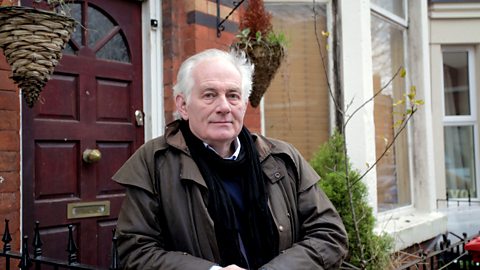
BBC/Oxford Film and Television/Lorian Reed-Drake
“I want to discover what made the terrace Britains home of choice and why they’re still as devoted to these houses as their first inhabitants were well over a century ago.”
This week’s programme examines the development of the terraced house in the Liverpool district of Toxteth during the 19th century. As the city grew as a port, its population expanded both with the rural exodus and the influx of Irish migrants fleeing the potato famine.
On Youtube here The Terrace

BBC/Oxford Film and Television/Lorian Reed-Drake
“I want to go beyond masonry and mortar and come face to face with residents past and present, I want to understand how they lived and how they transformed buildings into homes.”
In a remarkable programme lasting just one hour Dan Cruickshank traces the development of a Warwickshire village beginning with its entry in the Domesday Book then through 500 years of history to the present day, studying in great detail the transformation of Medieval cottage life to the home comforts we have come to know by way of the chimney stack, glass windows and separate rooms for different functions.
On Youtube here The Cottage